

Jesse Hackett Shares a Playlist of Songs That Inspired His New Solo Album, 'Nocturnes'
Everything from Morton Feldman to Erik Satie

The other day, I woke up to a fog as soupy and sinister as the central figure in the freaky John Carpenter film that turned 45 last year. Not quite what you’d expect in the middle of a Minnesota winter, it seemed to hang over our house like a shadow lingering just outside its window panes.
Sure enough, I had the perfect match for this mood: Nocturnes, the first proper solo LP from multi-instrumentalist/composer/producer Jesse Hackett in more than a decade. Piano-led and sax-laced songs in search of a serious ghost story, it’s essential listening for anyone into moon-lit music along the lines of Bohren & Der Club of Gore, The Caretaker, and unsettling film scores from another timeline entirely.
More than any of his myriad projects over the past couple decades (Owiny Sigoma Band, his Blludd Relations duo with Bullion) and the elusive productions and pieces he’s created for Stones Throw, Nyege Nyege Tapes, and Honest Jon’s — either under his Elmore Judd alias, or alongside visual artist Mariano Chavez in the otherworldly outlets Metal Preyers and Teeth Agency — Nocturnes also feels deeply personal.
There’s a reason he released it under his own name, and put a faded photo of his grandparents on the cover, a decision he detailed on Instagram:
🌑 Nocturnes Album Image 🌑
Albert & Blanche Close .My grand parents .
Blanche was a factory worker in Hull and also an accomplished pianist who taught children privately from her home .
The album which features this image on the cover is dedicated to my mum, Judy who after her own mother passed away decided she wanted me and my brother to learn to play piano keeping the tradition in the family .
Thanks Blanche Thanks Judy
Much Loved & Much Missed
X
It’s not that Hackett’s other records have worn a metaphorical or literal mask (although Metal Preyers did make a menacing hoodie once). It’s just that he’s starting to reflect on his own life in a more direct manner than he could when he was, say, playing keyboards in Gorillaz — a role he fit right into between the band’s Escape to Plastic Beach and Song Machine tours.
With a Nocturnes live show currently in development along with another Metal Preyers x Akira Umeda album (last year’s Clube da Mariposa Mórbida LP actually features the artwork of Hackett’s father Bill, a sculptor/jewelry designer who brought Keith Richard’s iconic skull ring to life), we thought we’d ask for a rundown of the records that inspired this meditative turn inward and out.
Be sure to lean into more expansive listens of the albums he alludes to if you’re looking for the perfect Sunday pairing. I, for one, appreciated the intro to Morton Feldman’s For Bunita Marcus. Aki Takahashi’s performance is particularly haunting, reflecting her (in the words of Feldman himself) seance-like approach to the piano.
Erik Satie, Vexations
Vexations is an 1893 avant-garde piano piece by Erik Satie consisting of a short, dissonant theme that must be played 840 times consecutively. A complete performance — first organized by John Cage in 1963 — lasts around 18–24 hours. It is often considered a pioneering work of conceptual art, creating a trance-like, or sometimes distressing, experience for both performers and listeners.
Until recently I was only familiar with Satie’s most well-known works. The universally recognized pieces, such as Gymnopédie No. 1, were enough to make me want to explore further.
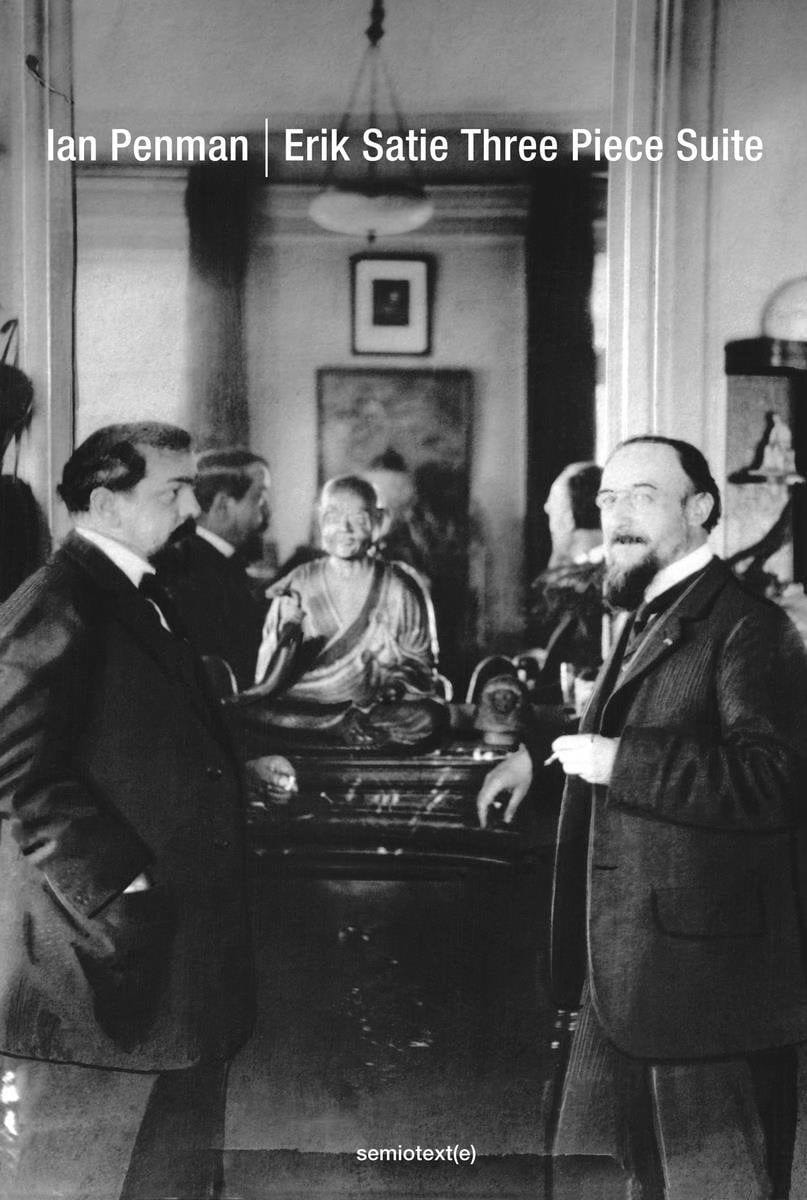
Mark Ainley, the founder of Honest Jon’s Records, recommended that I listen to Bertrand Chamayou’s interpretations. They are played beautifully and sound incredible. The particular album I listened to also included pieces by John Cage.
I am now reading a book about Satie by Ian Penman called Erik Satie Three Piece Suite. It has been fascinating to learn more about this incredibly idiosyncratic and eccentric figure. Just before he died, Satie was composing music for a film called Entr’acte, which was intended to be shown during an avant-garde ballet performance.
Maurice Ravel, Miroirs (1905)
Miroirs (1905) is a seminal five-movement suite for solo piano by the French composer Maurice Ravel, marking an important evolution in his harmonic style toward Impressionism. Dedicated to members of the avant-garde group Les Apaches, the work evokes natural, nocturnal, and emotional imagery through shimmering and complex textures.
I have always been haunted by this piece. It sounds aquatic, dark, and completely nocturnal. I remember spending long late-night hours in my early 20s taking drugs and listening to this music with my girlfriend in the suburbs of East London.
Dark stuff.
Olivier Messiaen, Oraison
This piece was written for an early electronic instrument: the Ondes Martenot, a close relative of the theremin. It is a haunting work that somehow reminds me of Delia Derbyshire, the BBC Radiophonic Workshop, and the soundtracks of early black-and-white science-fiction films.
Cold gear.
John Cage, All Sides of a Small Stone
All Sides of a Small Stone is a beautiful Satie-inspired lullaby by John Cage, performed by Bertrand Chamayou. It provides a lighter, more emotive moment amongst the darker and murkier pieces I have selected here.
Béla Bartók, Bagatelles, Op. 6, Sz. 38: No. 3
What I enjoy about this piece is the whole-tone scale and the rippling sound effects, which also remind me of some of Ravel’s piano works.
Morton Feldman, For Bunita Marcus
For Bunita Marcus is a renowned 70–80 minute solo piano composition dedicated to the American composer of the same name. It is a quintessential late-period avant-garde work, characterized by extreme quietness, sparse repeating patterns, subtle shifts in harmony, and a strong focus on sonic decay.
Maurice Ravel, Pavane pour une infante défunte
Pavane pour une infante défunte (“Pavane for a Dead Princess”) is a work for solo piano written in 1899 while Ravel was studying at the Conservatoire de Paris under Gabriel Fauré.
Ravel described the piece as “an evocation of a pavane that a little princess might, in former times, have danced at the Spanish court.”
The pavane was a slow processional dance that was popular in European courts during the 16th and 17th centuries.
Erik Satie, Le Fils des étoiles
Le Fils des étoiles (“The Son of the Stars”) is incidental music composed in December 1891 by Erik Satie to accompany a three-act poetic drama of the same name.
It is an important work from Satie’s mystical period (1891–1895) and later played a role in his rediscovery by the French musical establishment in the 1910s.
Erik Satie, Gnossiennes: No. 4
The term “Gnossienne” is somewhat mysterious. Although Satie popularised the word, it appeared earlier in French literature and in the 1865 Larousse Dictionary, referring to a ritual labyrinth dance created by Theseus to celebrate his victory over the Minotaur.
The Gnossiennes are a series of piano compositions written by Satie in the late 19th century. The pieces are largely in free time and are highly experimental in their form, rhythm, and harmonic structure.
Maurice Ravel, Ma mère l’Oye
I learned to play this piece by the French composer Maurice Ravel called Ma mère l’Oye (“Mother Goose”). It was originally written in 1910 as a five-movement piano duet for children and was later orchestrated into a ballet in 1912.
Inspired by fairy tales, the work features delicate, magical melodies and elegant harmonies. It evokes a quiet, mysterious atmosphere—something I’ve been trying to explore in music myself.
Further Listening
I do not have a Playlist. But if I did, it would look a bit like yours.